
Azzad MarketWeek
Stocks rose last week as trade developments, positive Q3 corporate results, and momentum in megacap tech drove another rally, despite some cautious comments from the Fed.
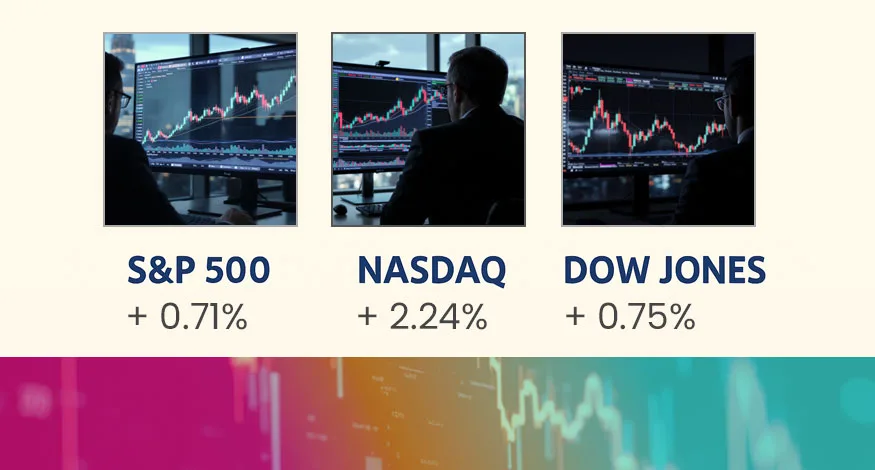
The Standard & Poor’s 500 Index gained 0.71 percent, while the tech-heavy Nasdaq Composite Index picked up 2.24 percent. The Dow Jones Industrial Average rose 0.75 percent.
Stocks Up for Third Straight Week
Stocks rose over the first half of the week on news that Chinese and U.S. officials were working on a trade deal. Meanwhile, a rise in AI-related tech names lifted the broader market ahead of the Federal Open Market Committee (FOMC) meeting. All three major averages notched record closing highs for the first two days of the week, including the S&P 500 closing above 6800 for the first time.
Stocks continued their rise Wednesday morning as the AI trade continued to fuel momentum. But markets wobbled following the FOMC’s decision to cut interest rates by a quarter percentage point. Chair Powell’s comments that the Fed may not adjust rates in December cut short the market’s rally.
Stocks bounced out of the gate on Friday, with the Nasdaq leading gains for all three major averages as several megacap tech companies rallied on upbeat Q3 results and other corporate news.
Investing involves risks, and investment decisions should be based on your own goals, time horizon, and tolerance for risk. The return and principal value of investments will fluctuate as market conditions change. When sold, investments may be worth more or less than their original cost.
The forecasts or forward-looking statements are based on assumptions, may not materialize, and are subject to revision without notice.
The market indexes discussed are unmanaged, and generally, considered representative of their respective markets. Index performance is not indicative of the past performance of a particular investment. Indexes do not incur management fees, costs, and expenses. Individuals cannot directly invest in unmanaged indexes. Past performance does not guarantee future results.
The Dow Jones Industrial Average (DJIA) is a price-weighted index composed of 30 widely traded blue-chip U.S. common stocks. The S&P 500 is a market-cap weighted index composed of the common stocks of 500 largest, publicly traded companies in leading industries of the U.S. economy. The NASDAQ Composite Index is a market-value weighted index of all common stocks listed on the NASDAQ stock exchange. The Russell 2000 is a market-cap weighted index composed of 2,000 U.S. small-cap common stocks. The Global Dow is an equally weighted index of 150 widely traded blue-chip common stocks worldwide. The U.S. Dollar Index is a geometrically weighted index of the value of the U.S. dollar relative to six foreign currencies. Market indexes listed are unmanaged and are not available for direct investment.
Fixed income investments are subject to various risks including changes in interest rates, credit quality, inflation risk, market valuations, prepayments, corporate events, tax ramifications and other factors.
International investments carry additional risks, which include differences in financial reporting standards, currency exchange rates, political risks unique to a specific country, foreign taxes and regulations, and the potential for illiquid markets. These factors may result in greater share price volatility.