

Azzad MarketWeek
Stocks made gains last week, even as megacap tech gains outweighed economic concerns.
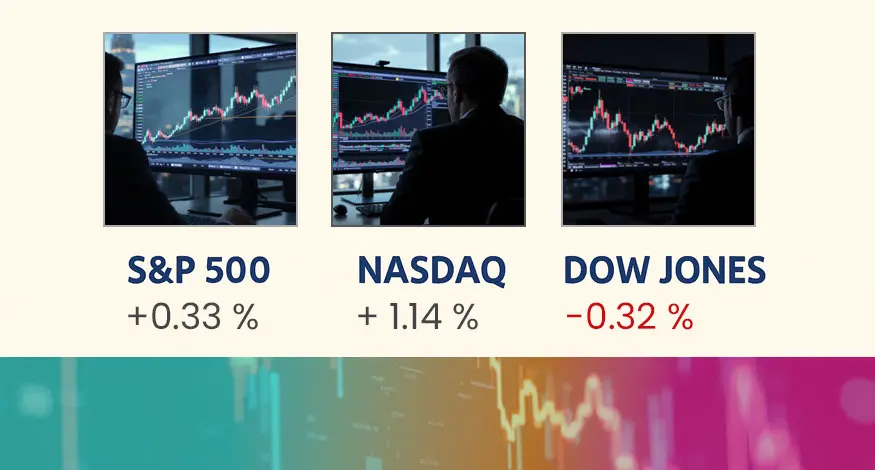
The Standard & Poor’s 500 Index advanced 0.33 percent, while the Nasdaq Composite Index rose 1.14 percent. The Dow Jones Industrial Average descended 0.32 percent.
Tech Gains, Jobs Slow
Markets started the week on shaky ground. The Dow Industrials, S&P 500, and Nasdaq each slipped downward more than half a percentage point. Tariff uncertainty rose again, as a court ruling injected fresh doubt. Meanwhile, rising Treasury yields amplified volatility and rattled megacap tech names.
By Tuesday, stocks managed a partial rebound, and market direction shifted. Tech bounced back the next morning—led by two megacap tech stocks’ gains—with one soaring after avoiding an antitrust penalty.
On Thursday, softer private hiring data and rising layoff trends fueled hopes of an imminent Fed rate move, with the S&P hitting a fresh record close. Treasury yields dropped significantly on rate-cut speculation, reinforcing risk appetite. The mood shifted again on Friday. A surprisingly weak jobs report undercut market optimism.
Investing involves risks, and investment decisions should be based on your own goals, time horizon, and tolerance for risk. The return and principal value of investments will fluctuate as market conditions change. When sold, investments may be worth more or less than their original cost.
The forecasts or forward-looking statements are based on assumptions, may not materialize, and are subject to revision without notice.
The market indexes discussed are unmanaged, and generally, considered representative of their respective markets. Index performance is not indicative of the past performance of a particular investment. Indexes do not incur management fees, costs, and expenses. Individuals cannot directly invest in unmanaged indexes. Past performance does not guarantee future results.
The Dow Jones Industrial Average (DJIA) is a price-weighted index composed of 30 widely traded blue-chip U.S. common stocks. The S&P 500 is a market-cap weighted index composed of the common stocks of 500 largest, publicly traded companies in leading industries of the U.S. economy. The NASDAQ Composite Index is a market-value weighted index of all common stocks listed on the NASDAQ stock exchange. The Russell 2000 is a market-cap weighted index composed of 2,000 U.S. small-cap common stocks. The Global Dow is an equally weighted index of 150 widely traded blue-chip common stocks worldwide. The U.S. Dollar Index is a geometrically weighted index of the value of the U.S. dollar relative to six foreign currencies. Market indexes listed are unmanaged and are not available for direct investment.
Fixed income investments are subject to various risks including changes in interest rates, credit quality, inflation risk, market valuations, prepayments, corporate events, tax ramifications and other factors.
International investments carry additional risks, which include differences in financial reporting standards, currency exchange rates, political risks unique to a specific country, foreign taxes and regulations, and the potential for illiquid markets. These factors may result in greater share price volatility.