
In every market cycle, there are stories that capture investors’ attention.
A stock doubles in a matter of months. An entrepreneur builds a billion-dollar company. A new investment trend creates sudden fortunes. Financial media celebrates success, and investors naturally begin to wonder whether they are missing out.
While the details may change from one generation to the next, the underlying human emotions remain remarkably consistent: ambition, greed, fear, envy, gratitude, and pride.
This is one reason why the Qur’anic story of Qarun remains so relevant for investors today.
Wealth Is Both a Blessing and a Test
Many people remember Qarun as the man whose immense wealth ultimately led to his destruction. Yet the story offers a deeper lesson than simply warning against wealth itself.
Allah tells us:
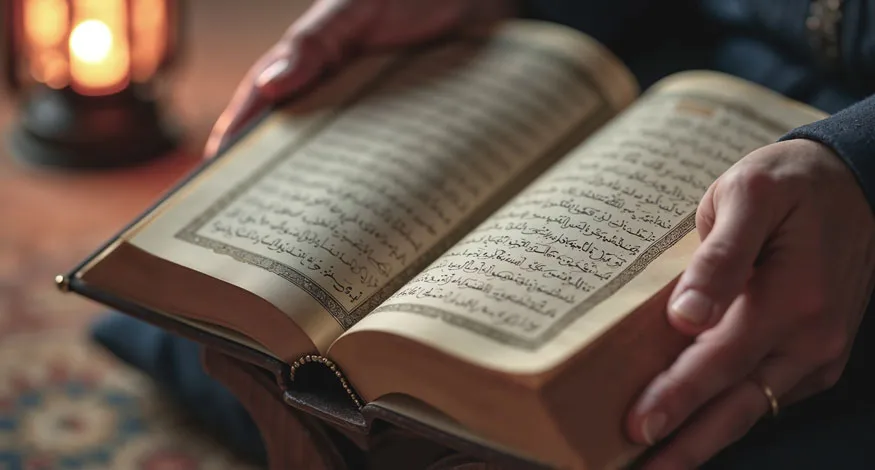
“Indeed, Qarun was from the people of Musa.” (Qur’an 28:76)
Qarun was not disconnected from faith. He knew right from wrong and understood the guidance of Allah. His story reminds us that financial success can sometimes expose a person to spiritual risk.
Many investors begin with good intentions. They save to support their families, prepare for retirement, fund their children’s education, or leave a legacy. But as wealth grows, priorities can begin to shift. What starts as stewardship can slowly become attachment. What begins as gratitude can become entitlement.
The challenge is not wealth itself. It is how wealth changes the heart.
The Danger of Mistaking Success for Self-Sufficiency
As Qarun’s wealth increased, so did his sense of self-importance.
When advised by others, he responded:
“I was only given it because of knowledge I possess.” (Qur’an 28:78)
This mindset is particularly relevant in investing. During strong markets, it is easy to attribute success entirely to our own intelligence, strategy, or decision-making. Rising account balances can create the illusion that we are fully in control of outcomes.
Yet history tells a different story.
Bull markets eventually become bear markets. Companies once viewed as unstoppable disappear. Entire industries rise and fall. Investors who remain humble recognize that many factors contributing to success—opportunity, timing, health, market conditions, and guidance—are blessings from Allah.
Good investing requires skill and discipline. It also requires humility.
The Purpose of Wealth
Perhaps the most powerful lesson in the story comes when Qarun is advised:
“But seek, through what Allah has given you, the Home of the Hereafter.” (Qur’an 28:77)
This verse reframes the purpose of wealth entirely. For believers, investing is not merely about accumulating the largest portfolio or achieving the highest return. Wealth is a tool entrusted to us by Allah.
When managed responsibly, it can:
- Fund charitable causes.
- Strengthen our communities.
- Establish awqaf and educational institutions.
- Create opportunities for future generations.
The question is not simply, “How much did my investments grow?”
A more important question may be: “What did my wealth help me become?”
Did it increase gratitude, generosity, and trust in Allah? Or did it increase anxiety, arrogance, and attachment to worldly success?
Balancing Dunya and Akhirah
Islam does not discourage wealth creation.
The Qur’an continues:
“And do not forget your share of this world.” (Qur’an 28:77)
Financial planning, investing, entrepreneurship, and business ownership all have an important place in Islam. Wealth can be a tremendous force for good when it is acquired ethically and used responsibly.
The goal is not to reject wealth but to maintain the proper relationship with it.
Markets will rise and fall. Economic cycles will come and go. Asset values will fluctuate. But our ultimate purpose remains unchanged.
A Timeless Lesson for Investors
The story of Qarun concludes with a dramatic reminder of how quickly worldly success can disappear.
Those who once envied his wealth suddenly recognized that financial success without gratitude, humility, and purpose is not true success at all.
For today’s investors, the lesson is clear: A well-managed portfolio is important. Saving for retirement is important. Building financial security is important.
But wealth should always remain a means, not an end. As Muslims, we strive to grow our assets responsibly while remembering that our greatest investment is not measured solely by financial returns. It is measured by how our wealth helps us serve Allah, benefit others, and prepare for the life to come. Because the most successful investment strategy is not simply the one that produces the highest return in this world.
It is the one whose rewards continue long after this life has ended.
Past performance is not indicative of future results. The material above has been provided for informational purposes only and is not intended as legal, tax, or investment advice or a recommendation of any particular security or strategy. The investment strategy and themes discussed herein may be unsuitable for investors depending on their specific investment objectives and financial situation. Information obtained from third-party sources is believed to be reliable though its accuracy is not guaranteed, and Azzad Asset Management, Inc. makes no representation or warranty as to the accuracy or completeness of the information, which should not be used as the basis of any investment decision. Information contained on third party websites that Azzad Asset Management, Inc. may link to is not reviewed in their entirety for accuracy and Azzad Asset Management, Inc. assumes no liability for the information contained on these websites. Opinions expressed in this commentary reflect subjective judgments of the author based on conditions at the time of writing and are subject to change without notice. No part of this material may be reproduced in any form, or referred to in any other publication, without express written permission from Azzad Asset Management, Inc. For more information about Azzad Asset Management, Inc., including our Form ADV brochures, please visit https://adviserinfo.sec.gov and search for our firm name.