Azzad MarketWeek
Stocks declined over an unusually volatile week as midterm results shifted control of Congress and markets responded.
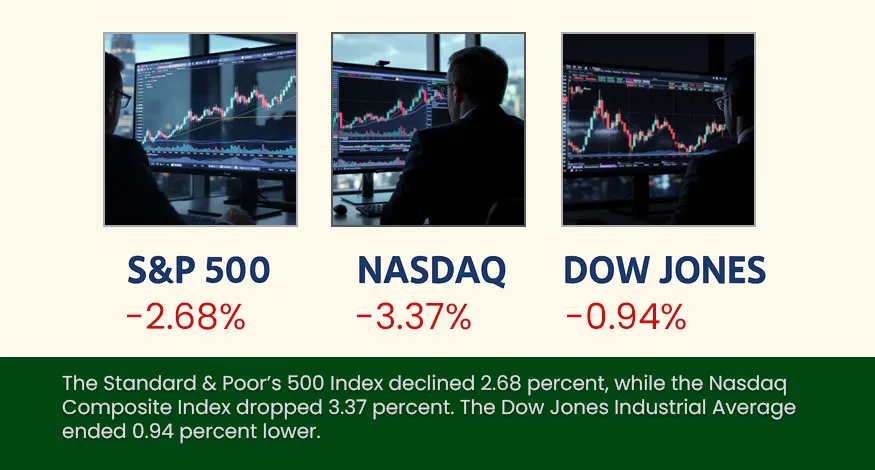
The Standard & Poor’s 500 Index declined 2.68 percent, while the Nasdaq Composite Index dropped 3.37 percent. The Dow Jones Industrial Average ended 0.94 percent lower.
A Volatile Week
Stocks were mixed to start the week, kicking off November with a continued rotation out of technology stocks in favor of more defensive names.
Markets then jumped midweek as investors believed a decisive midterm election result would help reduce political uncertainty risk. Economically sensitive stocks led the rally, while chip stocks and other tech names trailed. The Dow Industrials rose over 3 percent—its best day in more than 1½ years.
But stocks were under steady pressure on Thursday, with tech leading all three major market averages down. Investors continued to rotate out of the AI trade as anxiety grew about what’s next. The Nasdaq dropped 5½ percent while the S&P 500 slid 4.4 percent.
The week wrapped on a positive note with markets pushing higher on Friday as investors cheered a better-than-expected jobs report, which helped buoy investor sentiment.
Investing involves risks, and investment decisions should be based on your own goals, time horizon, and tolerance for risk. The return and principal value of investments will fluctuate as market conditions change. When sold, investments may be worth more or less than their original cost.
The forecasts or forward-looking statements are based on assumptions, may not materialize, and are subject to revision without notice.
The market indexes discussed are unmanaged and generally considered representative of their respective markets. Index performance is not indicative of the past performance of a particular investment. Indexes do not incur management fees, costs, and expenses. Individuals cannot directly invest in unmanaged indexes. Past performance does not guarantee future results.
The Dow Jones Industrial Average (DJIA) is a price-weighted index composed of 30 widely traded blue-chip U.S. common stocks. The S&P 500 is a market-cap weighted index composed of the common stocks of 500 largest, publicly traded companies in leading industries of the U.S. economy. The NASDAQ Composite Index is a market-value weighted index of all common stocks listed on the NASDAQ stock exchange. The Russell 2000 is a market-cap weighted index composed of 2,000 U.S. small-cap common stocks. The Global Dow is an equally weighted index of 150 widely traded blue-chip common stocks worldwide. The U.S. Dollar Index is a geometrically weighted index of the value of the U.S. dollar relative to six foreign currencies. Market indexes listed are unmanaged and are not available for direct investment.
Fixed income investments are subject to various risks including changes in interest rates, credit quality, inflation risk, market valuations, prepayments, corporate events, tax ramifications and other factors.
International investments carry additional risks, which include differences in financial reporting standards, currency exchange rates, political risks unique to a specific country, foreign taxes and regulations, and the potential for illiquid markets. These factors may result in greater share price volatility.